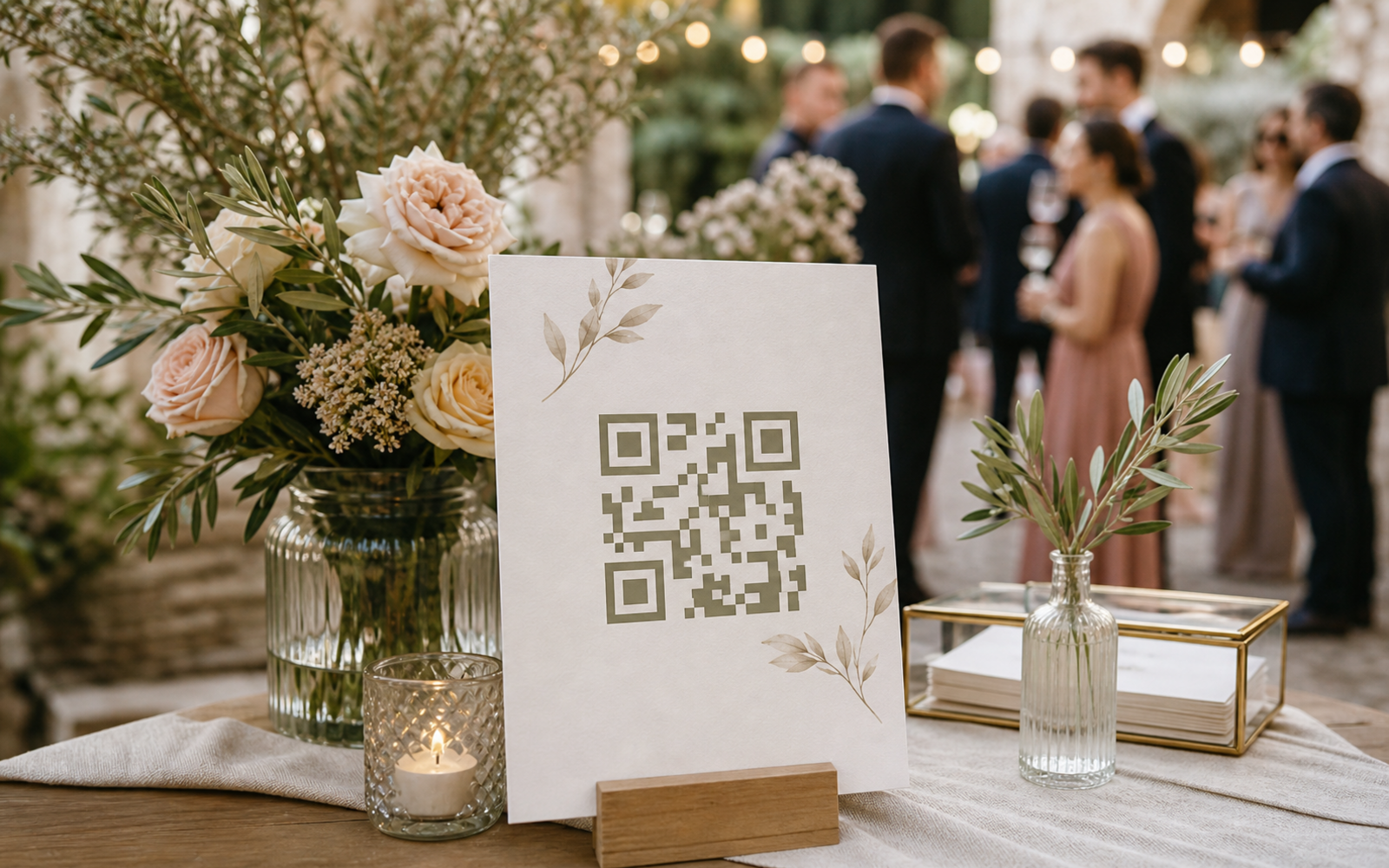
A wedding QR code can be more than a practical shortcut. Used thoughtfully, it can connect the physical celebration with a digital experience that is simple, elegant, and useful.
The key is restraint.
Not everything needs to become digital
A QR code should reduce friction. It should not make the wedding feel like a tech demo.
It can support directions, menus, RSVP updates, schedules, guest messages, and wedding photo contributions. The best uses are the ones guests immediately understand.
QR codes for wedding photos
For guest photos, a QR code removes the awkward parts. Guests do not need to download an app, find an old email, or remember to send photos later.
They scan, contribute, and return to the celebration.
How to make a QR code feel elegant
Treat it as part of the design, not an afterthought.
Use strong contrast, enough white space, a short instruction, stationery that matches the wedding, testing across phones, and placement where guests naturally pause.
The prompt matters
Upload your photos here is clear, but it is not very memorable.
Share one moment you want us to remember gives guests a reason to care.
That small change can improve the quality of what they contribute.
MomentoShake and the QR ritual
With MomentoShake, the QR code opens a private photo ritual. Guests take one meaningful photo, add a message, shake the phone, and watch the Polaroid-style image develop into the couple’s private album.
The QR code is not the story. It is the doorway.
If you want a wedding QR code that supports a more intentional guest photo experience, explore how MomentoShake works.
Practical planning framework
A useful way to apply this in real wedding planning is to decide three things before you choose any tool: the prompt, the limit, and the container.
Start with the prompt: what exactly are guests being asked to notice? Keep it specific and emotional, not generic.
Then decide the limit: one photo per guest is usually enough to improve quality and reduce post-wedding sorting fatigue.
Finally choose the container: a private album with a clear access point usually performs better than scattered channels.
If these three decisions are clear, participation feels effortless and the final archive feels coherent.
Common mistakes to avoid
Couples usually run into the same issues:
- asking guests to upload everything without a prompt;
- collecting photos in multiple places;
- giving technical instructions without emotional context;
- skipping privacy expectations;
- waiting until the last week to set up the flow.
A small amount of intentional setup before the wedding prevents most of the confusion after the wedding.