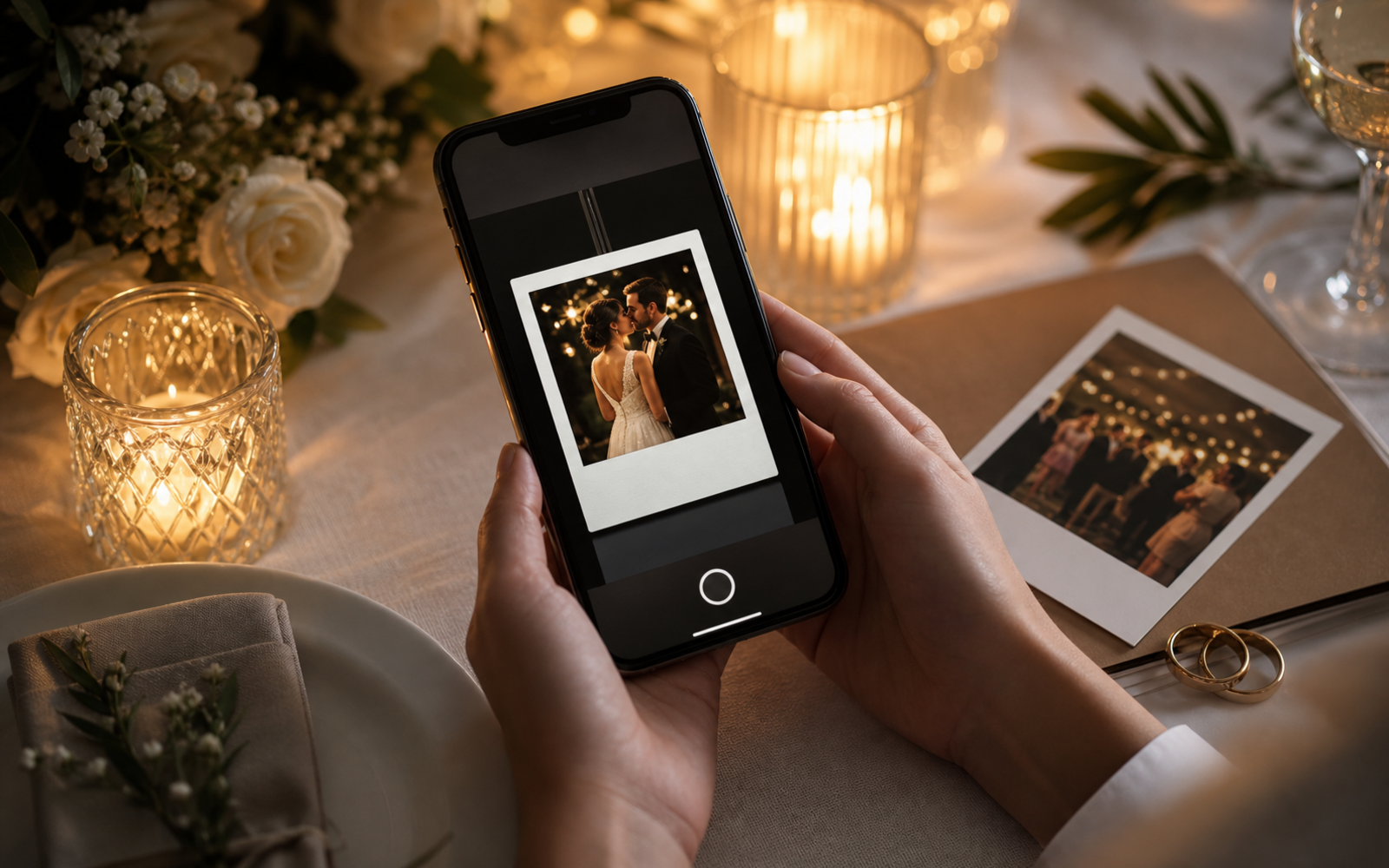
Polaroids have always carried a particular kind of charm. They are not just images. They are objects, gestures, pauses, and little moments of anticipation.
Polaroid wedding photos still feel special because they slow photography down.
Why Polaroids still feel emotional
A Polaroid suggests that a moment is singular. It is not one of fifty near-identical shots. It has a frame. It asks to be looked at one image at a time.
That is a powerful feeling in a digital wedding world.
The beauty of waiting
Modern phone photography is instant and endless. Polaroid-style photography brings back a different rhythm: choose, wait, watch, keep.
That rhythm fits weddings beautifully because the day itself is full of small transitions that deserve attention.
Physical or digital Polaroids?
Physical Polaroids are tactile and charming, but they involve cameras, film, lost prints, uneven image quality, manual collection, and album assembly.
Digital Polaroid-style albums keep the visual nostalgia while making storage, privacy, and guest participation easier.
How to avoid making it feel gimmicky
Keep the experience refined:
- use clean design;
- match the wedding stationery;
- avoid forced props;
- ask for real moments;
- include personal messages;
- keep the album private.
MomentoShake and the digital development ritual
MomentoShake brings the Polaroid feeling into a modern guest experience. Guests scan a QR code, take one photo, shake the phone, and watch it develop into the couple’s private album with a message.
It keeps the nostalgia, but removes the mess.
If you love the feeling of Polaroids but want a private, organized digital album, explore MomentoShake.
Practical planning framework
A useful way to apply this in real wedding planning is to decide three things before you choose any tool: the prompt, the limit, and the container.
Start with the prompt: what exactly are guests being asked to notice? Keep it specific and emotional, not generic.
Then decide the limit: one photo per guest is usually enough to improve quality and reduce post-wedding sorting fatigue.
Finally choose the container: a private album with a clear access point usually performs better than scattered channels.
If these three decisions are clear, participation feels effortless and the final archive feels coherent.
Common mistakes to avoid
Couples usually run into the same issues:
- asking guests to upload everything without a prompt;
- collecting photos in multiple places;
- giving technical instructions without emotional context;
- skipping privacy expectations;
- waiting until the last week to set up the flow.
A small amount of intentional setup before the wedding prevents most of the confusion after the wedding.